
The 2026 Outdoor Audio Video Guide: How to Build the Ultimate Backyard Entertainment System
- Chris Dudley

- Apr 28
- 13 min read
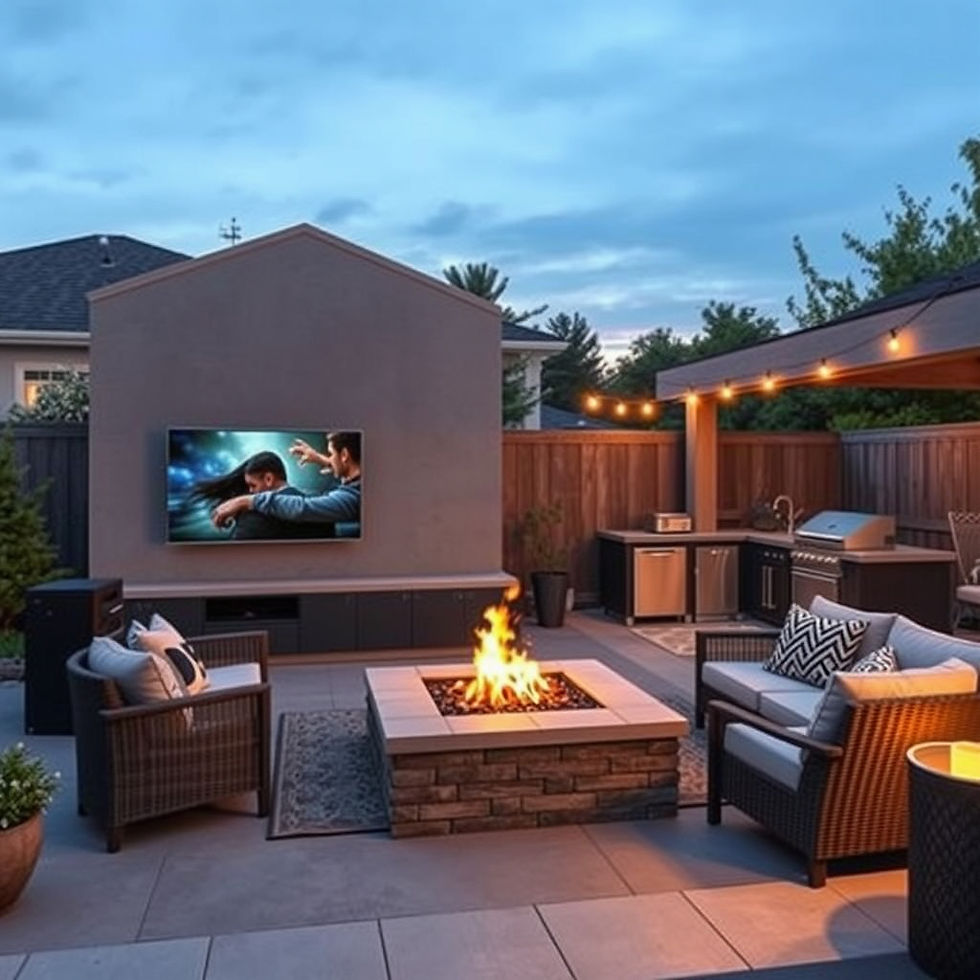
Outdoor audio video has become one of the best ways to turn a backyard, patio, deck, pool area, or outdoor kitchen into a true extension of the home. In 2026, homeowners are looking for more than a basic speaker or a TV mounted outside. They want outdoor entertainment systems that sound clear, look clean, connect reliably, and hold up in real weather.
A well-planned outdoor audio video system can make your space better for music, movies, sports, family nights, parties, and everyday relaxing. The key is choosing the right combination of outdoor speakers, displays, wiring, Wi-Fi, and controls for the way you actually use your space.
Whether you want a simple patio sound system or a complete outdoor home theater, this guide will help you plan a setup that feels natural, performs well, and is easy to enjoy.
What Is an Outdoor Audio Video System?
An outdoor audio video system combines sound, video, connectivity, and control equipment designed for exterior spaces. Depending on the size of the project, it may include outdoor speakers, landscape speakers, outdoor subwoofers, outdoor TVs, projectors, screens, amplifiers, streaming devices, smart remotes, lighting controls, and weatherproof wiring.
A basic outdoor audio video setup might include two patio speakers and a weather-resistant TV. A more advanced system may include multiple audio zones, an outdoor kitchen display, poolside speakers, landscape audio, outdoor Wi-Fi, smart lighting, and app-based control.
The best system is not always the biggest or most expensive. It is the one designed around how you want to use your outdoor space.
Why Outdoor Audio Video Is Worth Planning Carefully
Outdoor entertainment areas have different challenges than indoor rooms. Inside your home, walls and ceilings help contain sound and control light. Outside, sound spreads out quickly, sunlight affects screen visibility, and equipment must deal with moisture, heat, cold, dust, wind, and insects.
That is why outdoor audio video should be planned as a complete system rather than a collection of separate devices.
A good system should answer questions like:
How will people use the space? Where will they sit? What areas need music? Will the TV be in shade, partial sun, or direct sunlight? Is the outdoor Wi-Fi strong enough? How will the system be controlled? Can it expand later?
When these details are considered before installation, the final result is cleaner, easier to use, and more reliable.
Start With How You Use Your Outdoor Space
Before choosing equipment, think about the main purpose of your outdoor entertainment area.
For sports and everyday TV watching
Choose a weather-rated outdoor TV, reliable streaming connection, and speakers positioned around the main viewing area. This setup works well for patios, decks, outdoor kitchens, and covered seating areas.
For music and entertaining
Focus on outdoor speakers, landscape audio, and multiple zones. Instead of blasting music from one location, a distributed speaker system can provide balanced sound throughout the space.
For backyard movie nights
Consider an outdoor projector, screen, comfortable seating, lighting control, and upgraded audio. Projector setups are best for evening use or very shaded areas.
For pool areas
Use durable outdoor speakers, safe wiring practices, and equipment placed away from direct water exposure when possible. Pool areas often benefit from landscape speakers and hidden subwoofers.
For outdoor kitchens
Plan for a TV that can be viewed from the cooking and dining areas, plus speakers that provide clear sound without overwhelming conversation.
Once you know how the space will be used, it becomes much easier to choose the right outdoor audio video equipment.
Outdoor Speakers: The Foundation of Great Outdoor Sound
Speakers are one of the most important parts of any outdoor audio video system. Outdoor sound behaves differently than indoor sound because there are no walls to reflect and contain it. This means speaker placement matters just as much as speaker quality.
A common mistake is installing one or two speakers and turning them up too loud. This creates uneven sound, where one area is overpowering and another area is too quiet. A better approach is to use multiple speakers at lower volume so the sound feels smooth and natural across the entire space.
Wall-mounted outdoor speakers
Wall-mounted speakers are a popular choice for patios, decks, pergolas, and covered outdoor kitchens. They can be installed under eaves, on exterior walls, or near seating areas.
These speakers work best when aimed toward the listening area rather than toward neighboring homes.
Landscape speakers
Landscape speakers are designed to blend into garden beds, lawns, and planting areas. They are ideal for larger yards because they can spread sound evenly across multiple areas.
This option is great for homeowners who want music without visible speakers mounted on the house.
Rock speakers
Rock speakers are made to look like natural stones and can be placed in landscaping. They are useful when you want speakers to disappear visually into the outdoor environment.
Outdoor subwoofers
An outdoor subwoofer adds low-end sound that helps music and movies feel fuller. Because bass can disappear quickly outdoors, a subwoofer can make a big difference in larger patios, pool areas, and outdoor theaters.
Outdoor soundbars
An outdoor-rated soundbar can be a simple upgrade for an outdoor TV. It may work well for smaller viewing areas, though larger spaces usually need separate speakers for better coverage.
Speaker Placement Tips for Outdoor Audio Video
Good speaker placement creates better sound and helps control noise. In outdoor spaces, the goal is usually even coverage rather than maximum volume.
Place speakers around the listening area instead of trying to push sound from one side of the yard to the other. Aim speakers toward patios, seating areas, pools, or dining spaces. Avoid pointing speakers directly at neighboring properties when possible.
For larger spaces, divide the area into zones. You might have one zone for the patio, another for the pool, and another for the fire pit. This allows you to adjust volume by area and keep the sound comfortable.
A well-designed outdoor audio video system should let people talk, relax, and enjoy music without feeling like they are standing next to a concert speaker.
Outdoor TV Installation: Choosing the Right Display
An outdoor TV is often the visual centerpiece of a backyard entertainment system. While it may be tempting to install a standard indoor TV outside, outdoor environments require equipment designed for the conditions.
Outdoor-rated TVs are built to handle moisture, temperature changes, brighter light, dust, and other outdoor challenges. They are typically designed for specific viewing environments, such as shaded areas, partial-sun areas, or brighter exposed spaces.
Covered patio TVs
A covered patio TV is best for spaces protected by a roof, pergola, porch, or overhang. These areas usually have less glare and less direct exposure to rain.
Partial-sun TVs
Partial-sun TVs are designed for brighter outdoor areas where the screen may face indirect sunlight or reflected glare.
Full-sun TVs
Full-sun outdoor TVs are designed for the brightest and most exposed spaces. These are often used near pools, open patios, and areas with limited shade.
Choosing the right TV depends on where it will be installed, when you plan to watch, and how much sunlight the screen will receive.
Outdoor TV Placement Tips
Even a high-quality outdoor TV can be hard to enjoy if it is placed in the wrong location. Before installation, consider the sun, seating, glare, and viewing distance.
Mount the TV where people can watch comfortably from the main seating area. Avoid placing it too high, especially if viewers will be seated most of the time. Think about the direction of the sun during your usual viewing hours, not just how the space looks at one moment of the day.
Also consider reflections from pools, windows, stone, light-colored walls, and glass doors. Glare can make the screen difficult to see, even if the TV is bright.
Whenever possible, place the TV under cover or in a protected location. A weatherproof mount, proper power source, and protective cover can also help extend the life of the equipment.
Outdoor Projector Setup: Best for Movie Nights
An outdoor projector can create a large-screen movie experience in the backyard. It is a great option for family movie nights, parties, and special events.
Projectors work best after dark or in heavily shaded areas. Unlike outdoor TVs, projectors are usually not ideal for regular daytime viewing. The darker the environment, the better the image will look.
A complete outdoor projector setup may include:
A projector, outdoor screen, media source, speakers, power access, seating, and lighting control.
You can use a fixed screen, retractable screen, inflatable screen, or portable screen. For a cleaner permanent setup, a retractable screen can be installed near a patio, pergola, or outdoor structure.
If you want everyday sports, news, and streaming outside, an outdoor TV is usually the better choice. If you want a big cinematic experience at night, a projector may be perfect.
Outdoor TV vs. Projector: Which Is Better?
Both can work well, but they serve different needs.
Choose an outdoor TV if you want a permanent setup, daytime viewing, sports, casual streaming, simple operation, and a clear picture in brighter conditions.
Choose an outdoor projector if you want a large movie-night experience, flexible screen size, occasional use, and a more cinematic feel after dark.
For some outdoor audio video systems, homeowners choose both: an outdoor TV for everyday viewing and a projector for special movie nights.
Outdoor Wi-Fi and Networking
Modern outdoor audio video depends heavily on a reliable network. Streaming devices, smart TVs, music apps, lighting systems, security cameras, and control apps all need strong connectivity.
In many homes, the indoor router does not provide enough coverage for the backyard. Walls, glass, brick, stucco, metal, distance, and landscaping can weaken the signal before it reaches the patio or pool.
For better performance, consider adding an outdoor-rated Wi-Fi access point. In larger homes, a wired network connection to the outdoor access point can provide stronger reliability than relying on a weak signal from inside.
Good outdoor Wi-Fi helps with:
Streaming movies and sports, playing music, controlling speakers, managing smart lighting, using mobile apps, connecting outdoor cameras, and supporting guests during gatherings.
A beautiful outdoor audio video system can still feel frustrating if the network is unreliable, so plan connectivity early.
Smart Controls Make Outdoor Entertainment Easier
A great outdoor audio video system should be easy to use. Nobody wants to switch between multiple remotes and apps just to turn on music or watch a game.
Smart control can bring audio, video, lighting, and other features into one simple interface. Depending on the system, you may be able to control everything from a phone, tablet, remote, wall keypad, or smart home system.
Useful outdoor scenes might include:
Game Day: TV on, patio speakers active, lights adjusted for daytime viewing.
Dinner: Soft music, warm lighting, TV off.
Movie Night: Projector on, screen ready, lights dimmed, speakers set.
Pool Party: Pool speakers active, outdoor lighting on, music streaming.
Quiet Evening: Fire pit audio low, pathway lights on, outdoor TV off.
Smart controls are especially helpful for larger outdoor spaces with multiple zones.
Multi-Zone Outdoor Audio Video
Multi-zone control lets you manage different areas separately. This is one of the best upgrades for outdoor entertainment spaces.
For example, you may want music playing near the pool while the outdoor TV audio plays on the patio. Or you may want low-volume background music near the outdoor kitchen and louder music near the lawn.
Common outdoor zones include:
Patio, deck, pool, outdoor kitchen, garden, fire pit, pergola, dining area, and lawn.
Zoning improves comfort because every area does not need the same volume or source. It also helps avoid disturbing neighbors by keeping sound focused where people are actually gathering.
Weatherproofing Your Outdoor Audio Video System
Outdoor equipment needs to handle much more than occasional rain. Sun, humidity, dust, insects, salt air, wind, heat, cold, and seasonal changes can all affect performance.
For a durable system, choose outdoor-rated products whenever possible. This includes speakers, TVs, mounts, wiring, junction boxes, cable connections, and protective enclosures.
Weatherproofing considerations include:
Using outdoor-rated cables, protecting wire connections, sealing junction boxes, adding conduit, placing equipment under cover, using weatherproof mounts, allowing ventilation, and keeping devices away from standing water.
Even outdoor-rated equipment benefits from smart placement. A TV under a covered patio will usually have an easier life than one fully exposed to sun and storms. Speakers installed securely under eaves may last longer than speakers placed in harsh exposure.
If your outdoor audio video system involves power, trenching, outlets, or hardwired equipment, consult a qualified professional and follow local electrical codes.
Wiring and Power Planning
Clean wiring makes an outdoor audio video system look professional and perform reliably. It also helps reduce future problems.
Depending on the project, wiring may include speaker wire, Ethernet cable, HDMI cables, power wiring, conduit, control wiring, and low-voltage landscape audio wiring.
Wireless devices can be useful, but permanent outdoor systems often still need wired infrastructure. Outdoor TVs need power. Outdoor access points often work best with wired networking. Speakers usually perform best with properly installed speaker wire connected to an amplifier.
If you are building or remodeling a patio, outdoor kitchen, deck, or pool area, plan wiring before surfaces are finished. It is much easier to run conduit before stone, concrete, decking, or walls are complete.
It is also smart to plan for future expansion. Extra conduit or additional wire paths can make it easier to add speakers, lighting, cameras, or another display later.
Outdoor Lighting and Audio Video Work Together
Lighting has a major impact on how your outdoor entertainment space feels. It also affects safety, comfort, and video performance.
For a complete outdoor audio video experience, consider lighting for pathways, steps, seating areas, outdoor kitchens, pool edges, pergolas, gardens, and screen areas.
Lighting can also support different entertainment scenes. Bright task lighting may be helpful while cooking, while warm low lighting is better for dinner or movies.
For TV and projector areas, avoid placing bright lights where they reflect on the screen or shine directly into viewers’ eyes. For projector setups, dimmable lighting is especially helpful.
A coordinated lighting and AV design makes the backyard feel more polished and intentional.
Outdoor Audio Video for Different Backyard Spaces
Patio or deck
A patio or deck is often the easiest place to start. A wall-mounted outdoor TV, a pair of outdoor speakers, and app-based control can create a comfortable everyday entertainment area.
For larger decks, consider additional speakers so sound stays balanced from one end to the other.
Outdoor kitchen
Outdoor kitchens are ideal for audio video upgrades. A TV near the cooking or dining area makes it easy to watch sports, follow recipes, or entertain guests while preparing food.
Add speakers that cover the dining area without overpowering conversations.
Pool area
Poolside systems need extra care because of moisture and safety concerns. Weatherproof speakers, protected wiring, and safe equipment placement are essential.
Landscape speakers are often a good choice because they can provide even coverage without cluttering the pool deck.
Fire pit area
A fire pit area works well as a separate audio zone. Keep the volume comfortable and use warm lighting to create a relaxed atmosphere.
Garden or landscape area
Landscape speakers can add subtle music throughout the yard. This is a great option for entertaining, outdoor dining, or creating a peaceful atmosphere.
Backyard theater
A backyard theater may include a projector, large screen, outdoor speakers, subwoofer, lighting control, and comfortable seating. This setup is ideal for movie nights and special events.
Common Outdoor Audio Video Mistakes to Avoid
Using indoor equipment outside
Indoor TVs, speakers, mounts, and cables are not designed for outdoor exposure. Outdoor-rated equipment is safer and more durable.
Installing too few speakers
One or two speakers may not cover a large outdoor area evenly. Multiple speakers at lower volume usually sound better.
Ignoring Wi-Fi
Weak Wi-Fi can cause buffering, connection issues, and unreliable app control.
Mounting the TV in direct glare
Sunlight and reflections can make the screen difficult to see. Plan the TV location carefully.
Forgetting about neighbors
Speaker direction and volume control matter. Aim sound toward your own space and use zones when possible.
Skipping weatherproof connections
Outdoor wiring and connections need protection. Moisture can cause damage and reliability problems.
Buying equipment before designing the system
A good outdoor audio video setup starts with layout and goals, not random product purchases.
DIY vs. Professional Outdoor Audio Video Installation
Some simple setups can be DIY-friendly. A portable projector, small speaker system, or basic covered patio TV may be manageable for handy homeowners.
However, permanent outdoor audio video systems often benefit from professional installation. This is especially true when the project includes electrical work, wall mounting, trenching, conduit, multi-zone audio, networking, smart controls, or integration with lighting and security systems.
A professional installer can help with speaker placement, outdoor TV location, safe wiring, weatherproofing, network coverage, system design, and future expansion.
If you want a clean, reliable, long-lasting system, professional design and installation are usually worth considering.
How Much Does an Outdoor Audio Video System Cost?
The cost of an outdoor audio video system depends on the size of the space, equipment quality, installation complexity, and the features you want.
A simple patio audio setup may be relatively affordable. A complete backyard entertainment system with outdoor TV, multiple speaker zones, landscape audio, subwoofer, smart controls, lighting integration, outdoor Wi-Fi, and professional wiring will cost more.
Main cost factors include:
Number of speakers, type of display, size of the space, outdoor-rated equipment, wiring needs, mounting requirements, network upgrades, smart controls, and labor.
Instead of focusing only on the lowest equipment price, think about long-term performance. Outdoor systems face harsher conditions than indoor systems, so quality products and proper installation can save frustration over time.
2026 Outdoor Audio Video Planning Checklist
Use this checklist before starting your project:
Define how you want to use the space. Decide whether music, video, or both are the priority. Map out seating and activity areas. Choose between an outdoor TV, projector, or both. Check sun direction and glare. Plan speaker coverage. Decide whether you need multiple audio zones. Test outdoor Wi-Fi strength. Plan wiring and power. Choose outdoor-rated equipment. Protect cables and connections. Add lighting scenes. Consider smart controls. Plan for future expansion. Consult a professional for electrical work or complex installation.
A little planning can make the difference between a system that feels frustrating and one that feels effortless.
Final Thoughts
Outdoor audio video can completely change how you use your backyard, patio, deck, pool area, or outdoor kitchen. With the right design, your outdoor space can become a comfortable place to watch movies, enjoy music, follow the game, host friends, or relax with family.
The best 2026 outdoor audio video systems are not just loud or flashy. They are thoughtfully designed, weather-ready, easy to control, and matched to the way people actually live outdoors.
Start with your goals, plan the layout carefully, choose equipment built for exterior use, and make sure your Wi-Fi, wiring, and controls are ready to support the experience. The result is an outdoor entertainment system that looks great, sounds balanced, and makes your backyard more enjoyable year after year.
FAQ: Outdoor Audio Video
What is outdoor audio video?
Outdoor audio video refers to entertainment systems designed for exterior spaces. These systems may include outdoor speakers, TVs, projectors, screens, amplifiers, Wi-Fi, smart controls, and weatherproof wiring.
Can I use a regular TV outside?
It is not recommended. Indoor TVs are not built for outdoor moisture, temperature changes, dust, or bright sunlight. An outdoor-rated TV is a better choice for safety, visibility, and durability.
Are outdoor speakers different from indoor speakers?
Yes. Outdoor speakers are designed to handle weather, humidity, UV exposure, and temperature changes. They are also built to project sound in open-air spaces.
Is an outdoor projector better than an outdoor TV?
An outdoor projector is better for large movie-night viewing after dark. An outdoor TV is usually better for everyday use, sports, and daytime viewing.
How many outdoor speakers do I need?
It depends on the size and shape of your outdoor space. A small patio may only need two speakers, while a large yard may need multiple speakers or zones for even coverage.
Do I need outdoor Wi-Fi for an outdoor audio video system?
In most modern systems, yes. Outdoor Wi-Fi helps support streaming, smart TVs, music apps, lighting controls, and mobile control.
Should I hire a professional installer?
For a simple setup, DIY may be possible. For permanent systems involving wiring, outdoor TVs, electrical work, multiple zones, or smart controls, a professional installer is usually recommended.

Comments